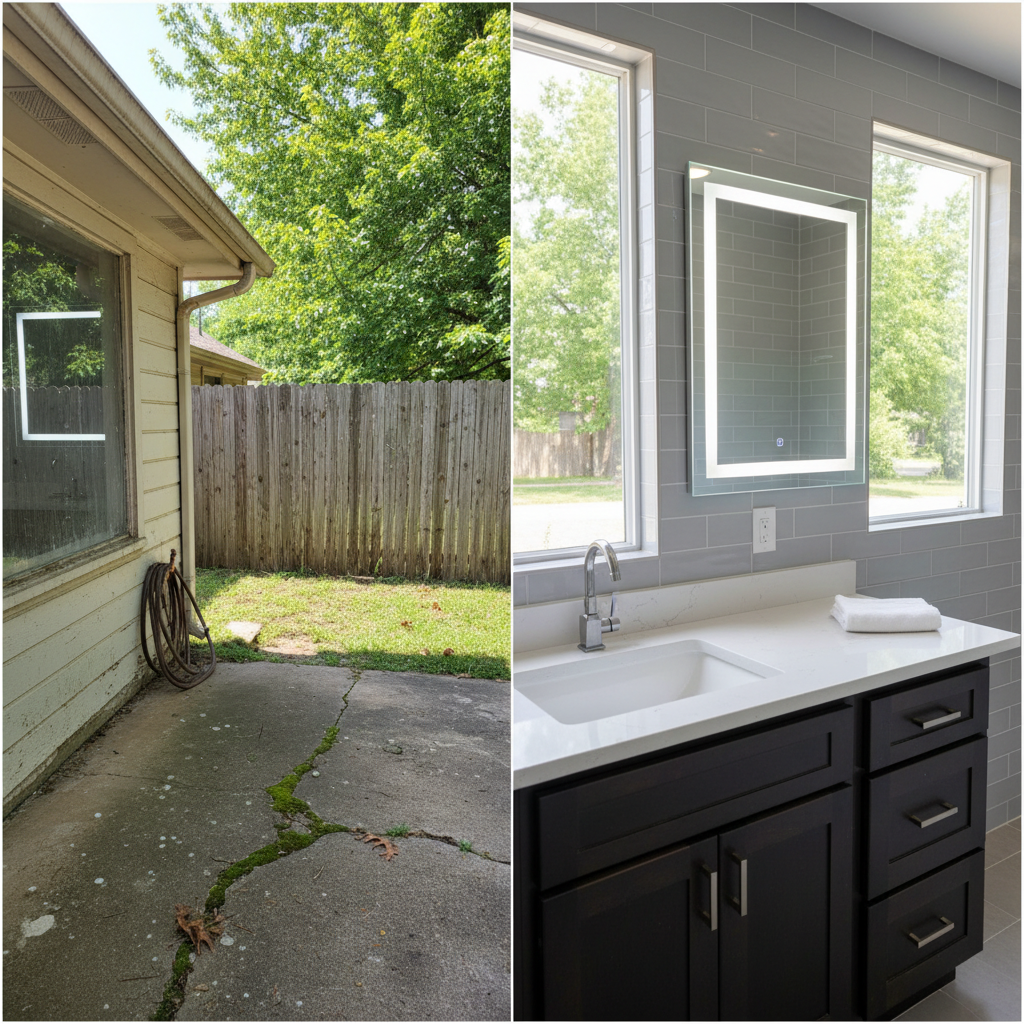
So, you're thinking about a new bathroom vanity and sink. Big decision, right? You've essentially got two main paths: a built-in cabinet vanity or a freestanding one. Both have their place, but figuring out which one truly fits your home and lifestyle here in Broken Arrow is key. I've installed plenty of both, and I've certainly seen what holds up and what doesn't, especially with our Oklahoma weather doing its thing.
Built-In Vanities: The Classic Choice
When most folks picture a bathroom vanity, they're probably imagining a built-in unit. These are the ones custom-fitted to your wall, often running the full length of a wall in a bigger bathroom or just snuggling into an alcove. They usually sit right on the floor, though some are wall-mounted, which gives you a nice bit of space underneath.
Pros of Built-In Vanities:
- Storage Galore: This is the big one, no doubt. You get maximum storage space under the counter. That's a lifesaver for stashing towels, toiletries, cleaning supplies, and all that bathroom clutter. If you've got a family or just a lot of stuff, this is a huge plus.
- Seamless Look: They create a very clean, integrated appearance. The countertop often extends over the cabinet, and it just feels like it's part of the room's architecture. This can make a smaller bathroom feel a little bigger and more organized.
- Durability and Stability: Because they're anchored to the wall and often to the floor, built-ins are incredibly sturdy. You're not going to accidentally nudge one out of place. This also means the plumbing connections are usually well-hidden and protected, which is smart.
- Counter Space: You generally get more usable counter space with a built-in, especially if you're doing a double vanity. That extra elbow room is really nice for getting ready in the morning.
Cons of Built-In Vanities:
- Less Flexibility: Once it's in, it's in. Moving or replacing a built-in vanity is a much bigger job than with a freestanding unit. You're often talking about demo, patching walls, and then installing new flooring if the old stuff didn't go all the way under.
- Cost: Generally, built-ins can be pricier, especially if you're going custom. More materials, more labor for installation, and often more complex plumbing.
- Potential for Moisture Traps: If not sealed properly, the edges where the vanity meets the wall can be a spot for moisture to sneak in. Here in Broken Arrow, our summers can get pretty sticky, so good caulking is absolutely essential.
Freestanding Vanities: The Furniture Look
Freestanding vanities look more like a piece of furniture, really. They stand on legs or a base, separate from the wall, though they're still plumbed in, of course. You see a lot of these in older homes, or in newer builds going for a more eclectic or vintage feel.
Pros of Freestanding Vanities:
- Style and Character: This is where freestanding really shines. You can find some incredibly unique designs, from antique dressers converted into vanities to sleek modern pieces. They can truly add a focal point and a lot of personality to your bathroom.
- Easier Installation (Sometimes): For a simple swap, a freestanding unit can be quicker to install since it doesn't need to be perfectly scribed to the wall. It can also be easier to move if you're redoing flooring or painting.
- Airflow: Because they're not sealed to the floor and wall, there's generally better airflow around and under them. This can be a small benefit for preventing moisture buildup, though it's not a deal-breaker either way.
- Cost (Potentially): You can find some very affordable freestanding vanities, especially if you're looking at mass-produced options.
Cons of Freestanding Vanities:
- Less Storage: This is the biggest drawback for most folks. You typically get less cabinet space, and sometimes it's just open shelving, which means you need to be tidier or find other storage solutions.
- Cleaning: You've got more nooks and crannies to clean around — the legs, the space underneath, and the sides. Dust bunnies love to gather under these things, and if you've got kids, toys can disappear under there too, believe me.
- Less Counter Space: Often, the countertop on a freestanding vanity is smaller, sometimes just enough for the sink and a soap dispenser. If you like to spread out your makeup or toiletries, this might feel cramped.
- Stability: While generally stable, they're not as rock-solid as a built-in. If you have little ones who like to climb, it's definitely something to consider.
My Take for Broken Arrow Homeowners
Alright, so which one should you go with? For most Broken Arrow homes, especially those in neighborhoods like Forest Ridge or Stone Creek where practical living and family needs are big, I usually recommend a built-in vanity.
Here's why: storage is king. You just can't beat the sheer amount of storage a built-in provides. Our homes here are built for real life, and real life comes with a lot of stuff. Plus, the durability and stability of a built-in are a huge advantage. You want something that's going to stand up to daily use for years without a fuss. The seamless look also tends to appeal to more homeowners, making it a safer bet for resale value down the line.
Now, if you've got a smaller powder room, or you're really going for a specific, unique design aesthetic in a guest bathroom, a freestanding vanity can be a fantastic choice. It can add a lot of charm and character. But for your main bathroom or a busy family bathroom, the practicality of a built-in usually wins out.
Ultimately, it comes down to your specific needs, budget, and the overall style you're aiming for. Think about how you use your bathroom every day. Do you need a ton of storage? Is a unique look more important than maximum counter space? Whatever you decide, make sure you're getting quality materials and a professional installation. We at Apex Bathroom Solutions are always happy to talk through your options and help you figure out the best fit for your home.